Market Overview
Have a look ...World Tube & Pipe Market: Factors influencing the current situation
Dr. Gunther Voswinckel – Update as per April 2026
Welcome to ITA’s and VOSCO´s regular presentation of the main worldwide economic factors influencing the tube and pipe industry.
The conflict in the Middle East has entered a new phase since US and Israeli troops attacked Iran on 28th of February 2026. Attacks by Iran on oil and gas vessels in the Strait of Hormuz have created a threatening situation, resulting in international insurance companies refusing to insure vessels passing through the strait. Consequently, around 26% of the global maritime oil and gas trade has effectively been blocked. Much of the oil and gas transported through the Strait of Hormuz is destined for Asian countries such as China, India and South Korea. With Iran now attacking oil and gas infrastructure in other Middle Eastern countries, the conflict is at risk of further escalation. The energy market is reacting with fears of possible regional shortages of oil and gas, causing significant price increases. Hopefully, this military conflict will be resolved quickly. Otherwise, the world economy will suffer major negative consequences. This conflict again highlights the sensitivity of logistical bottlenecks such as the Strait of Hormuz. Considering alternative logistical options will probably lead to new pipeline projects designed to bypass such chokepoints.
Ongoing global demand for oil and gas, its transmission via pipelines and demand for cars, machinery and construction, particularly in regions with high GDP growth, will support demand for tubular products.
Demand for tubes and pipes remained high and encouraging in 2025. Consequently, tube and pipe production increased by 10%. Demand for pipeline tubes larger than 16” OD even increased by almost 40%.
Oil and gas exploration in challenging environmental conditions requires corrosion-resistant tubular products, creating opportunities for advanced tube producers.
New market segments, such as carbon capture and storage (CCUS) and hydrogen pipelines, will create extra demand for tubular products. This will require larger quantities of higher-alloyed stainless steel and so-called sour gas alloys. The shift towards customer-centred production will continue to influence the landscape for tube manufacturers.
Prices of raw materials for steel and pipe products are rising again, and markets remain nervous amid the potential for further volatility.
There is still a risk that climate change policies will not be implemented in a balanced way, causing energy-intensive industries to shift to regions with lower energy costs. Nevertheless, the supply and demand balance in the pipe industry has largely been restored, resulting in more stable prices.
The shift towards environmentally friendly pipe production with a low carbon footprint is becoming increasingly important. Pipe manufacturers are converting their facilities from gas to electricity. Geopolitical and logistical risks, as well as current and future energy costs, remain key considerations.
Regions such as the USA, India, Turkey, the Middle East and China benefit from lower energy costs. Political interventions and regulations are having an increasingly significant influence on industry strategies. The dynamic nature of development makes it challenging to respond in a timely manner. Some manufacturers are reducing their involvement in high-cost regions such as Europe due to high costs, while seeking political countermeasures to offset these disadvantages.
All supply sources are under scrutiny, and it is hoped that international trade will not be adversely affected.
Disruptive times also create opportunities. Beyond oil and gas, new markets such as electromobility and improvements in production-site productivity tied to environmentally friendly practices present opportunities, as does enhanced customer service. In some regions, such as the US, finding skilled personnel is becoming increasingly challenging. Technology providers are expanding their portfolios to include green, robotic, digital and AI solutions.
Tube Düsseldorf 2026 is a great opportunity to learn about recent developments that will help sustain the tube and pipe industry.
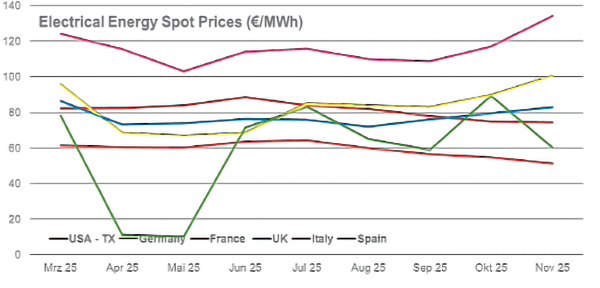
As previously mentioned, the ongoing availability of affordable energy is crucial. We monitor energy costs in selected regions worldwide (see Figure 1). Electricity costs are influenced by geopolitical turbulence, regulations and energy sources. Prices remain volatile, ranging from 20 to 140 €/MWh depending on the country (see Figure 1), reflecting the significant increase over the last 20 years and the subsequent economic uncertainties faced by energy-intensive industries.
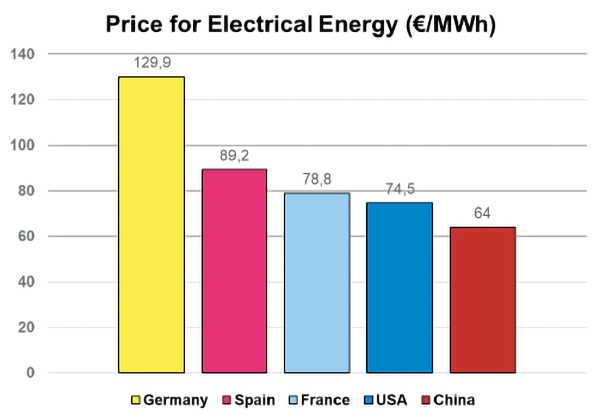
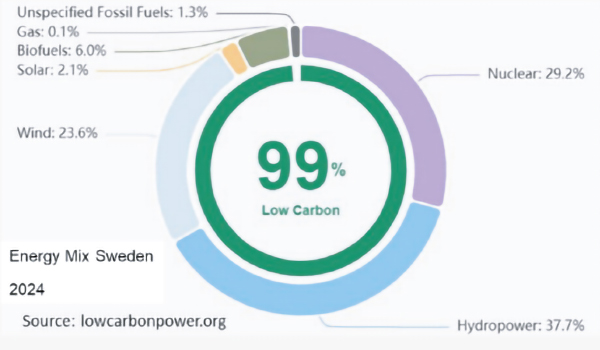
Figure 2 shows March 2025 electrical energy prices of selected countries. Europe is experiencing significant price variations and rising costs. Sweden, France and Spain are in a relatively better position than Italy and Germany. Countries with substantial nuclear or other low-cost, base-load energy sources retain cost advantages. For example, electricity costs in Texas, USA, at around 78 €/MWh, are about 20% lower than in many European countries. China, with costs of around 66 €/MWh, is even 35% lower!
Some countries, such as Saudi Arabia, offer electricity at around 40 €/MWh or less. Unfavorable European regulations or grid costs could widen the gap, prompting the relocation of production to regions with lower energy costs. The concentration of energy-intensive industries at the start of the production chain could have negative consequences for regions with high electricity costs.
Natural gas remains a key energy source that influences the steel tube market. Demand for tubes is driven by gas exploration and transportation. Despite efforts to reduce CO₂ emissions, gas remains essential for many industrial processes.
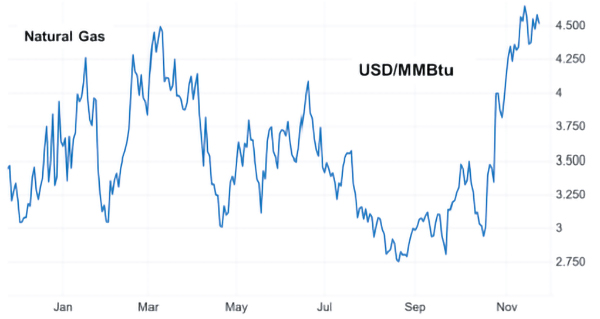
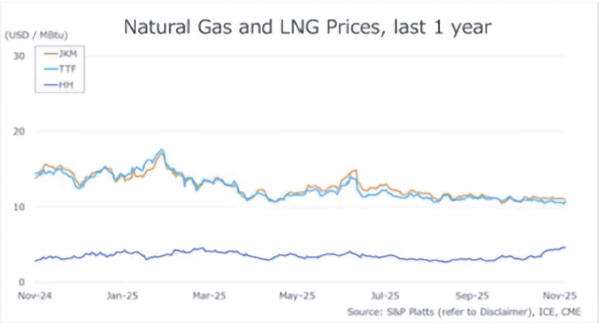
The price of gas at the Henry Hub in the US is very competitive, having declined to around 3.0 USD/MMBtu (equivalent to 9.2 €/MWh) in March (see Figure 3). Despite the recent war between the US/Israel and Iran, the price of natural gas directly from the pipeline has remained relatively low. However, a significant increase in price can be seen when comparing the price of LNG-based natural gas received by Europe and Asia since US and Israeli troops attacked Iran on 28 February 2026 (see Figure 4).
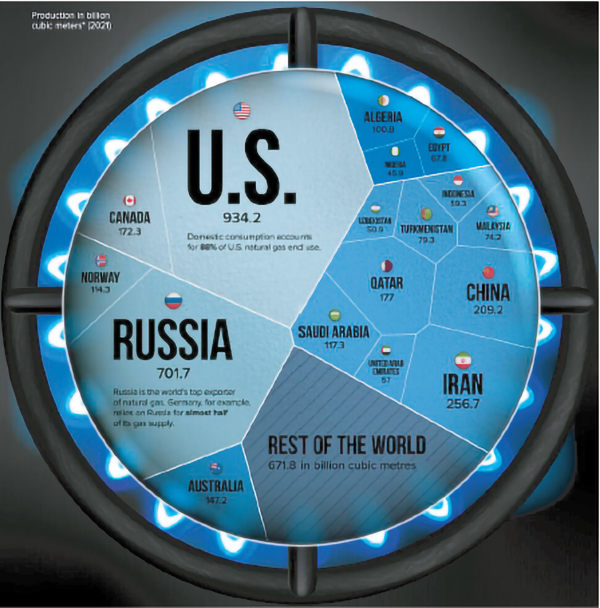
Part of the additional cost of LNG arises from processing costs, such as liquefaction at −162 °C, transportation by ship and re-evaporation. These processes incur an additional cost of around 8–10 US USD/MMBtu or 24,5-30 €/MWh. However, due to the current blockade of the Strait of Hormuz, LNG cannot currently be transported from Qatar, Saudi Arabia or the United Arab Emirates to Asia or other destinations. This just results in a price increase of around 100% to $18/MMBtu or €57/MWh — approximately 6 times higher than the price of natural gas transported by pipeline in the US, for example. Regions such as Europe, which lack adequate connections to international natural gas pipeline networks, are now heavily dependent on LNG. These regions face significantly higher prices for LNG than for pipeline gas. These additional costs affect regions that cannot access affordable pipeline gas, making LNG a predominantly short-term solution for securing supply. The recently concluded agreement between the US and Europe foresees energy deliveries worth approximately USD 750 billion over three years. In 2024, Europe imported around USD 80 billion worth of energy products from the US, including 36 million tons of LNG and a record 74.5 million tons of crude oil. Tripling such flows will be challenging, given recent growth rates. While this agreement strengthens Europe’s supply security, it comes at the cost of much higher LNG prices. This is particularly the case if LNG supplies from the Middle East remain difficult. In the long term, Europe should consider alternative energy sources, including a renewed evaluation of cost-effective pipeline options. With production currently standing at around 934 bcm, the US is the world's largest gas producer and a gas superpower with growth potential. Around 88% of production is accounted for by domestic consumption, with the remaining 12% being exported as LNG. Russia (with ~702 bcm) is the second-largest gas producer and the largest pipeline exporter. However, sanctions and disrupted flows have created a structural disadvantage.
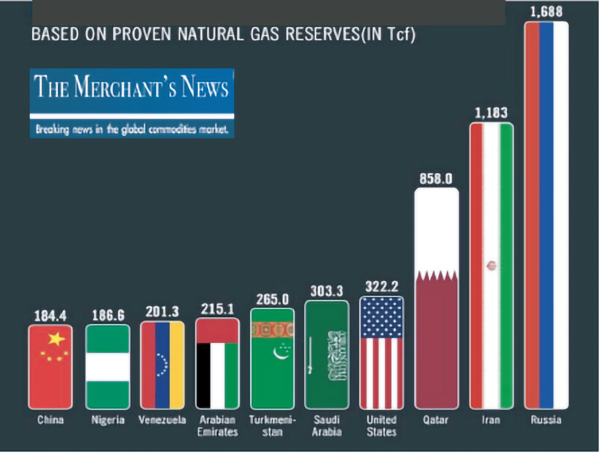
It should be noted that Russia has the largest proven gas reserves, at around 1.688 trillion cubic feet (Tcf), compared to the US's 322.2 Tcf (Figure 5).
Iran and Qatar also hold large reserves. While Qatar is expanding its LNG capacity, Iran’s reserves are constrained by sanctions and infrastructure issues. If the war between the US/Israel and Iran gets out of control and further oil and gas production infrastructure is affected, it may further influence LNG availability and prices. The European long-term strategy to replace natural gas with green hydrogen is increasingly questioned. Industrial-scale electrolysis requires substantial amounts of clean water and continuous green electrical power - approximately 55 MW per ton of hydrogen - the process is sensitive to fluctuations in electricity supply, which significantly reduces electrolyze stack lifetimes. As a result, economically viable green hydrogen production is limited to regions with stable and low-cost renewable or nuclear power. In most parts of Europe, such conditions are not yet achievable. Exceptions include Norway and Sweden. Hydrogen transport pipelines would create additional demand for alloyed steel tubes. Some experts, including those from the OECD, advocate producing hydrogen in regions with abundant, low-cost electricity (e.g., the Middle East, North Africa, or parts of Central America). Energy-intensive intermediate products - such as DRI/HBI - could be manufactured near the energy source and then transported to industrial centers such as in Europe or Asia. This approach would preserve technological expertise and employment in downstream metallurgical processes. However, these concepts still receive limited political support. For the European metallurgical and tubular industries, the sourcing of DRI/HBI as virgin steel source instead of iron ore and coke would be an interesting economical and logistical alternative.
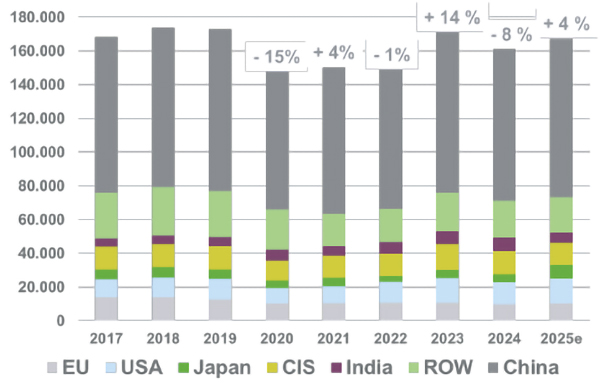
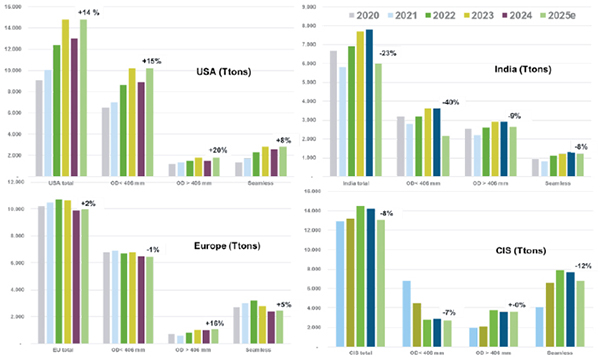
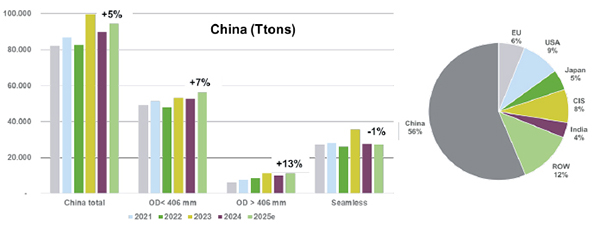
Since our last report in December 2025, we have learned that the presented figures for global tube production must be revised. Global tube and pipe production reached 88.9 million tons in the first half of 2025 (full-year estimate: 177.9 million tons). Following 161.2 million tons in 2024, this represents a 10% recovery (see Figure 6). Notably, there has been a boom in the production of pipeline tubes with an outer diameter (OD) of over 406 mm (16"). Production of these tubes has increased by 37%, from 22.5 to 31 million tons. The construction of new pipelines to meet new logistical requirements for redirecting oil and gas to customers at a reasonable cost has created a real boom.
- United States: After a week year 2024, production increased by 29% in 2025, driven by increased exploration and pipeline projects. Welded tubes smaller than 16” anyhow decreased by 2%, while pipeline tubes larger than 16” increased by remarkable 213%. Most producers are fully booked. Despite tariffs, it is anticipated that only further imports can satisfy US demand. Seamless tube production increased by 12%.
- India: Following a god year 2024, the first half of 2025 saw production reach an impressive record, with a tube and pipe production increase of +94%. Welded tubes under 16" increased even by 272%. Seamless tube production increased by 77%. Pipeline tube larger 16” OD production increased by a moderate 3%.
- Europe: Production remains at the low level of 2024, with only 3% growth in early 2025. Pipeline tubes measuring over 16% anyhow increased by 20%, while seamless production recovered by 8% following earlier cuts. Welded tubes measuring less than 16 inches decreased slightly by -2%.
- CIS: Total output declined by 7% in the first half of 2025. Seamless tubes decreased by 25%. Welded tubes below 16" remained low but increased by 31%. Pipeline tubes remained unchanged.
- China: Accounting for 52% of global output, China's growth was +5% in the first half of 2025 (see Figure 8). Pipeline tubes >16" increased by 56%, while tubes <16" shrank 5%. Strong activity in the Middle East compensated for U.S. trade restrictions.
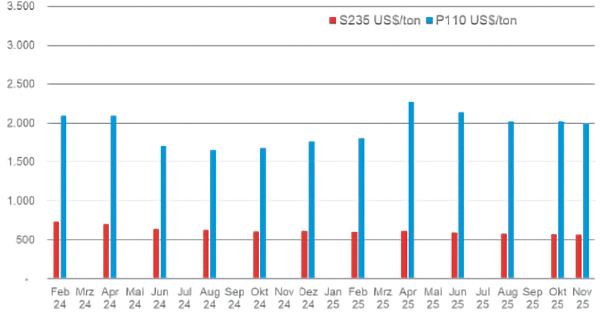
Prices for OCTG appear to have slightly decreased in 2026. Structural tube priced remain steady. Figure 9 shows price development for: • P110 OCTG casing (5.5") • S235 structural pipe
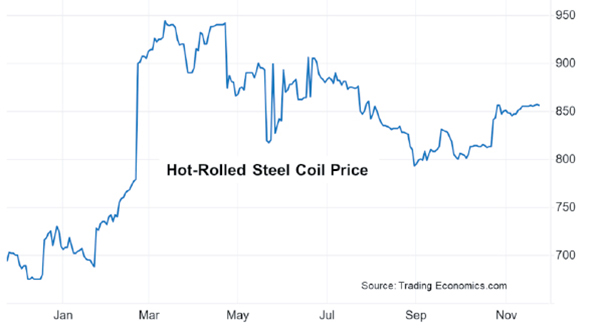
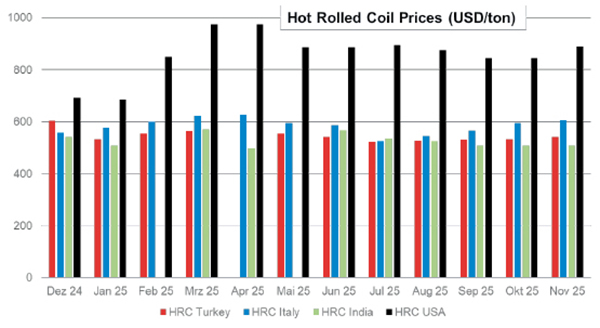
The P110 prices stabilized in 2025 at about USD 2,000/ton, in first quarter 2026 they came down to about USD 1800/ton. S235 structural pipe prices remained comparably stable at ~USD 600/ton, supported by infrastructure projects. About 73% of global pipe production is welded (~134 million tons in 2025), making producers highly dependent on hot-rolled coil (HRC) prices. US HRC prices rose from about USD 800/ton in October 2025 to USD 1.060/ton in March 2026. This means that welded pipe producers in the US are increasingly suffering from deterioration of margins. This is also reflected in the production of tubes <16” OD.
In contrast hereto, Turkey (~USD 541/ton) and India (~USD 432/ton) trade at significantly lower HRC price levels (Figure 11). These attractive Indian hot rolled coil prices are a reason for the significant boom of tubes <16”
Narrow margins in welded tube production remain a structural challenge. Specialty grades for OCTG are increasingly expensive and difficult to source.
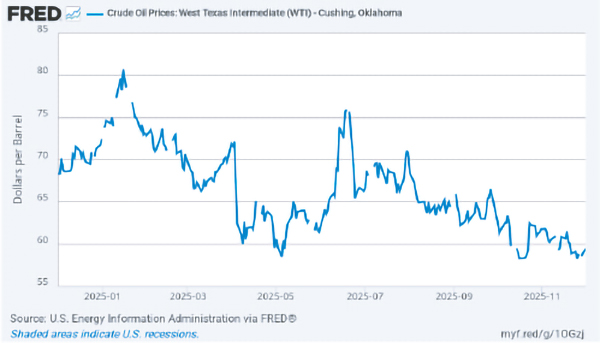
The oil and gas sector accounts for around 51% of the global demand for tubes and pipes. Consumption of OCTG correlates strongly with oil prices (see Figure 12). The oil price is significantly affected by the conflict between the US/Israel and Iran. Since 28th of February, the oil price has jumped from around 60 USD/Bbl to 100 USD/Bbl (+67%). Fears about the oil supply are driving the price up. These nervous reactions reflect uncertainty about the duration of the conflict and the extent to which exploration, processing and logistical infrastructure may be affected by bombing. Many industries that depend on moderate oil prices are suffering. Everyone hopes that Middle Eastern oil exploration sites and refineries will not be affected, and that the Strait of Hormuz will soon reopen.
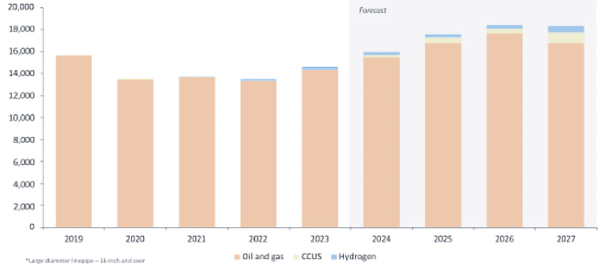
The US Energy Information Administration (EIA) reports a record high of 13.7 million barrels per day (Bbl/d) for March 2026, and forecasts 13.3 million Bbl/d for 2027. US oil and oil product exports reached a further record high of 11 million barrels per day in March 2026. According to Oilprice.com, the number of US oil rigs has remained relatively stable, increasing from 412 in December 2025 to 414 on 20th of March 2026. The number of gas rigs increased from 125 to 131 during the same period, driven mainly by shale gas. We have noted a significant increase in output per rig, which is due to improved rig productivity. US policy continues to prioritize fossil fuels and nuclear energy, with reduced focus on wind and solar power. It seems that exploration companies have recently focused more on profits and dividends than on expansion. The potential effects of a prolonged Iranian war and further damage to oil and gas infrastructure must be closely monitored. Meanwhile, the expected global oil demand for 2026 is rising moderately to 105 million bpd, driven mainly by Asia and emerging markets. Demand for tubular products will remain strong as concerns about energy security persist. The increased productivity of oil and gas rigs, as well as horizontal drilling technology for shale gas, requires many tubular products and creates an increased technological demand for the tubes and joints used for expolration. Corrosion and wear continue to affect the performance of OCTG, particularly in H₂S/CO₂-rich environments. So-called sour gas alloys are widely used. There is also rising demand for tubular products made from corrosion-resistant alloys (CRAs) and clad materials, which offer manufacturers opportunities for differentiation. Substantial investments in oil and gas transport networks are required due to geopolitical and economic developments. The ban on Russian natural gas in Europe, the cost disadvantage of LNG, and the shale gas boom in the US have resulted in a large number of pipeline projects and increased demand for pipes (Figure 13). The enormous rise in demand for pipes larger 16” in 2025 confirms this trend. Particularly India, US, China and Europe are benefitting.
With Carbon Capture, Utilization and Storage (CCUS) representing a new market, requiring extensive pipeline infrastructure, is emerging. CO₂ transport demands higher-alloyed materials due to corrosive conditions. Developing CO₂ pipeline networks will be essential for large-scale deployment and cost reduction, although challenges remain in permitting, investment, and public acceptance. Adoption is increasing in the U.S., the Middle East, and beyond.
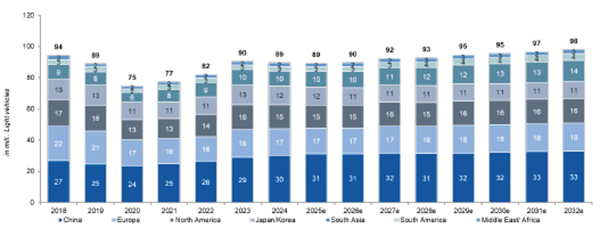
The automotive sector accounts for around 15% of the global demand for tubes. According to HIS, global light-vehicle production increased to 92 million units in 2025, a level which is expected to be maintained in 2026 (see Figure 16). Slight growth is forecasted for 2027 and the following years. Higher US tariffs and supply chain disruptions are rising manufacturing costs. However, Battery-Electric Vehicles (BEVs) had a strong year 2025, with around 13.7 million units, dominated by China. PwC expects the BEV market to grow by ~210% to 28.8 million units by the year 2030. It is forecast that the Chinese production share of the global BEV market will lose some of its dominance. Its market share is expected to fall from 66% to around 54% by 2030. The enormous growth of the BEV market is creating new applications for tubular products in frames and body structures.
Mechanical engineering accounts for around 9% of global tube production. Market volume is expected to grow from USD 3.6 billion in 2025 to USD 5 billion in 2030, mainly driven by China, India, the USA, and the Middle East. Industrialization is the driving factor.
Actual growth rates of 0.8% to 1.5%, caused by low investment due to uncertainty, will increase to 5% to 7% in the long term. Current trade wars, tariff escalations and political conflicts are disrupting international project supply chains and creating uncertainty for cross-border engineering assignments. Engineering firms with international operations must constantly adapt to changing political environments and regulatory restrictions. For example, the US is currently experiencing significant supply restrictions, resulting in a 3.7% contraction in production volumes, despite its general growth patterns. Another constraint is talent shortages and skills gaps. Competition for talent can drive up labor costs and limit growth for firms unable to attract and retain skilled professionals.
The intersection of mechanical design with software and electrical systems is creating a new generation of machinery.
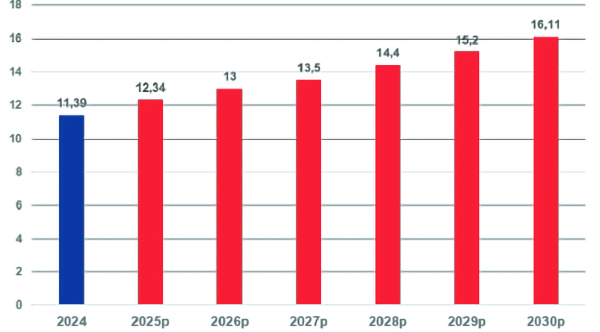
Construction represents about 5% of tube demand. According to GlobalNewswire (January 2026), the global construction market will account to USD 17.26 trillion in 2026 and is expected to exceed USD 21.73 trillion by 2030. This represents an annual growth rate of about 5,9% (Figure 18). Anyhow the short-term growth is expected to be slow, whereas the later growth will accelerate.
Population growth and major infrastructure initiatives - especially in India, China, the Gulf states and emerging markets - are key drivers. Adoption of structural tubes in construction varies globally. North America and parts of Asia widely use tubular structures, whereas Europe continues to rely mainly on concrete and open-section steel structures. The tube industry must promote the advantages of tubular profiles, including flexible geometry, high mechanical performance, smooth surfaces, and suitability for long spans. Alloyed steels may offer additional benefits. From a sustainability perspective, tubes produced from scrap in EAFs using green power significantly reduce carbon footprint. Additional capacity is particularly needed in India to meet growing demand.